

Wild Nature, Run Free.
Behind the scenes in Residency with Kristin Meek

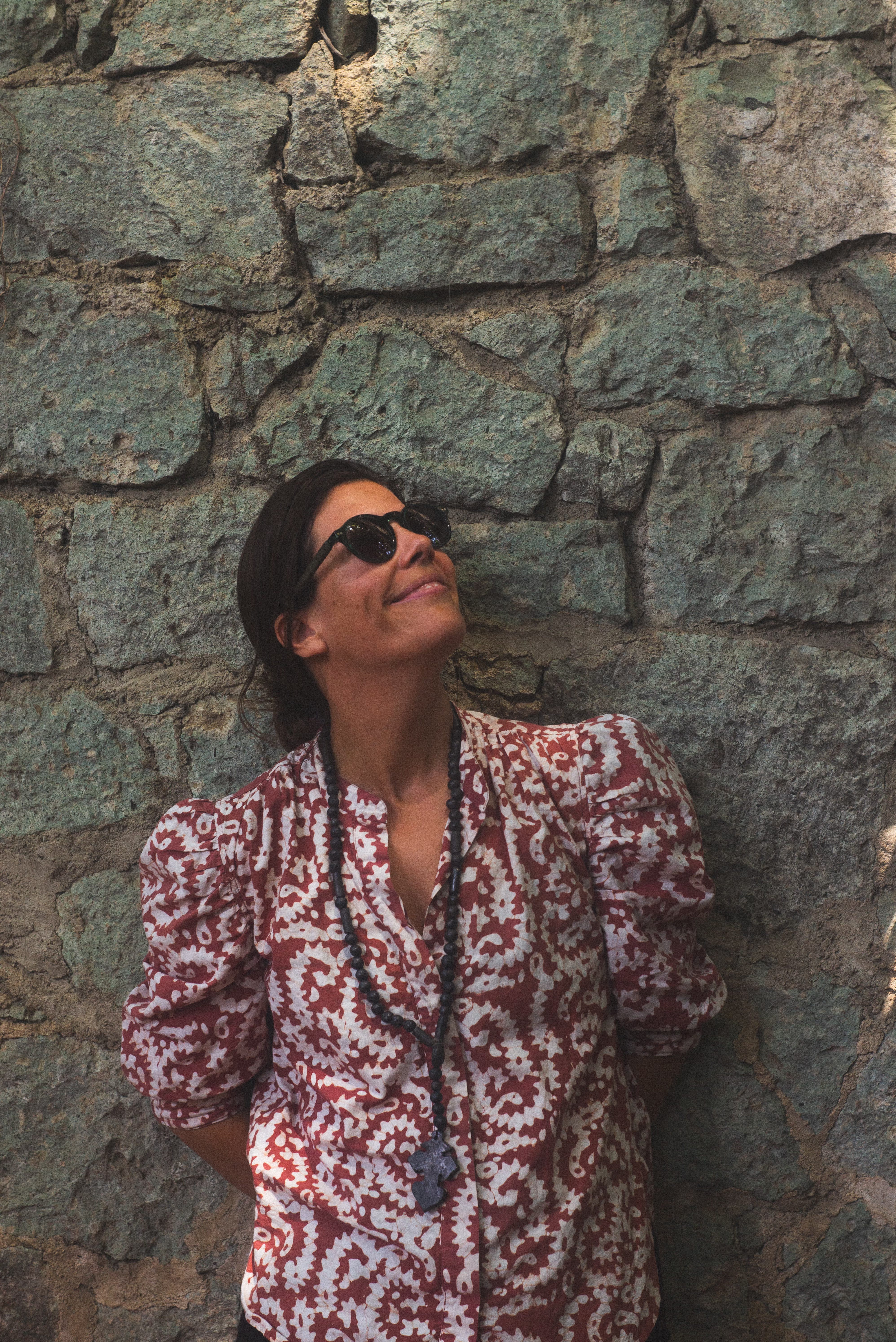
I want to begin by painting a portrait of someone deeply important to me.
Kristin Meek is one of my dearest friends. She is a mother, an entrepreneur, a woman who has spent much of her personal and professional life helping other people reconnect to nature and to themselves. She is a wild woman — which means she is someone who gives constantly and generously from a very deep well. She is also one of the first people in my adult life who taught me the value of friendship rooted in reciprocity. Our relationship has been, from the beginning, healing and foundational in a way I don’t take for granted.
And so when we explored the idea of working together, I felt a particular sense of trusted privilege that I want to name directly. To design for someone you love invites a different level of attunement — simply because of the depth of the relationship, but also because perhaps you are more intimate than most in the ways that person moves through their life. So when I was invited to imagine a creative residency for Kristin to fully receive herself, I was not listening only for what might feel nourishing. I was endeavoring to trace the lines of her longing, to feel into its essence and architect a space and time that would invite her wild nature to once again run free.
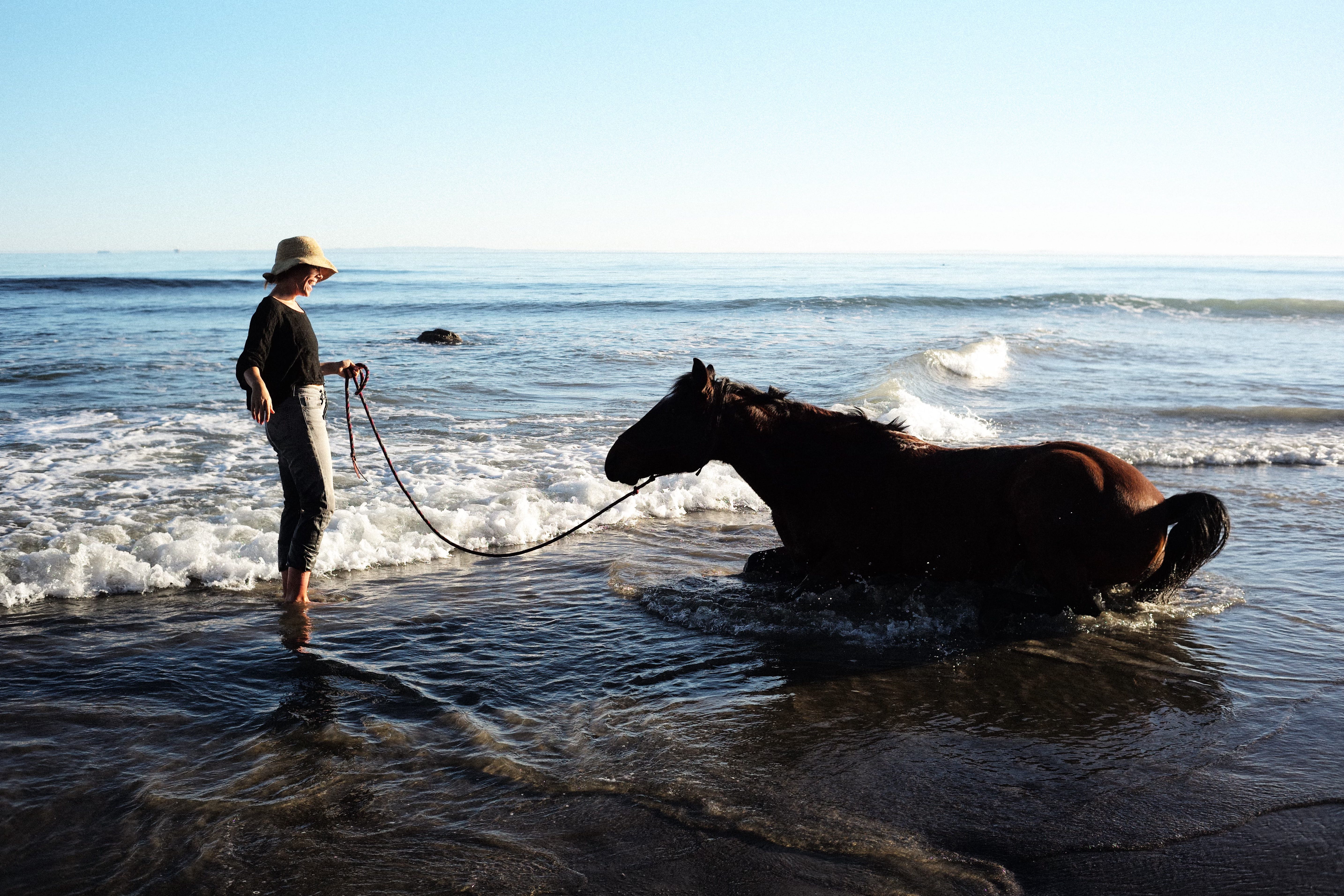
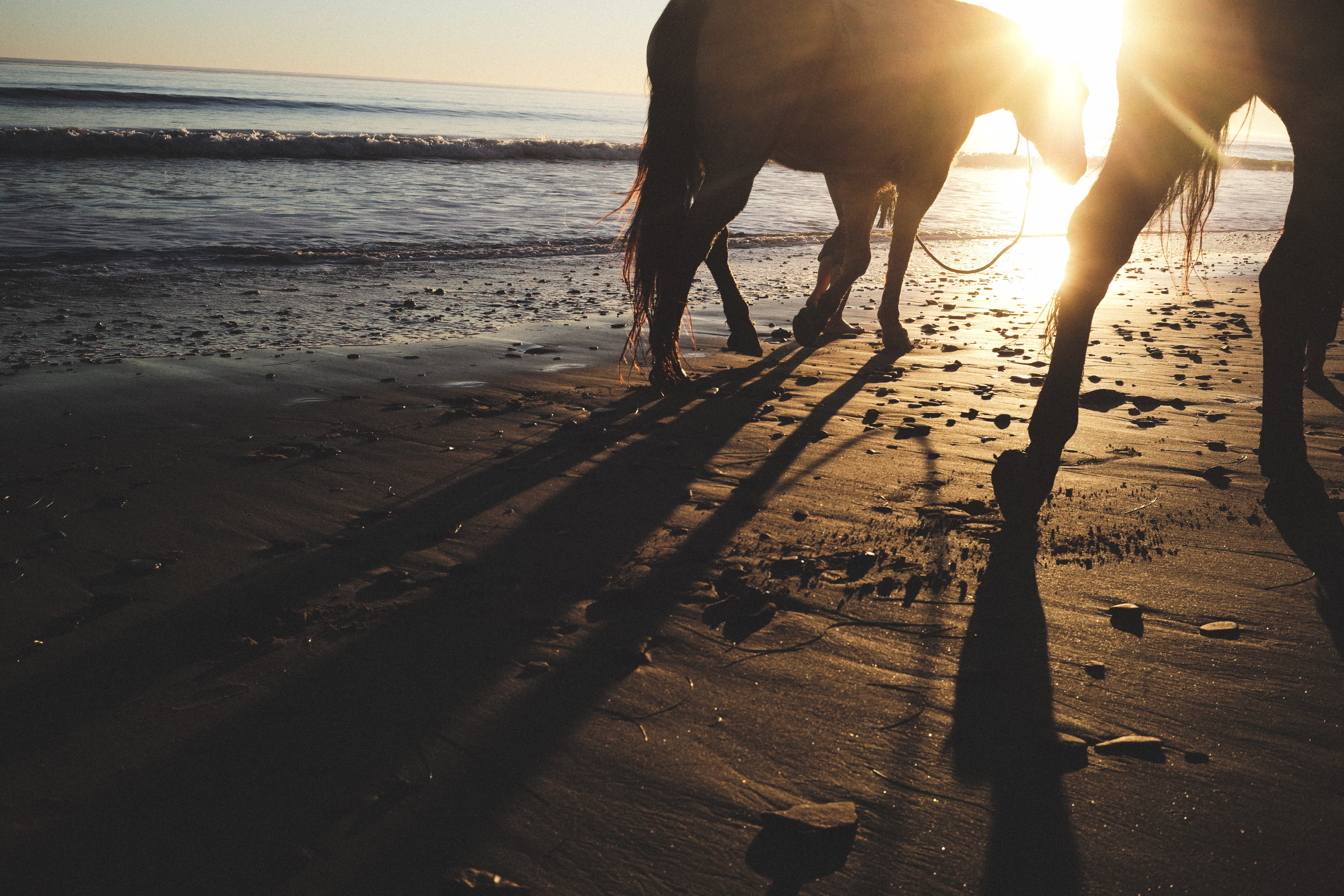
Rx: Open the container by picking up Kristin at the airport, picnic lunch from Merci, followed by an unbridled experience walking in the Ocean hoof to hoof with some pretty playful horses
Result: Embodied Joy, restored connection
Insight: Purposeful play is the most powerful portal to reignite pleasurable presence
Archaeology Of The Deep Mind: Mapping Emotional Terrain
Before Kristin arrived here in California in December of last year, we spent time together in what I call divine dialogues — a series of intake conversations that are less interview and more genuine encountering with one’s emotional atmosphere.
Every person who arrives at the threshold of a residency carries with them a series of states of being, i.e., the fluctuating nature of their interior climate — currents of feeling that have brought them to the point of saying: enough. Something has to shift; I need to make space for change.
For Kristin, that climate was made of three primary recurring emotional experiences: frustration, fragmentation, and overwhelm. These were not separate. They were working together — triangulating into what I have come to think of as a constellation of disconnection. Frustration feeding fragmentation - and fragmentation calcifying into a standing wave of overwhelm (A standing wave is a term used in physics to describe an oscillation pattern that remains in a fixed position rather than moving through space. It is created by the interference of two waves of the same frequency and amplitude traveling in opposite directions).
The overwhelm had closed off access to the very thing she most wanted to move toward: a creative project. A book, in some form. Memoir, perhaps. Poetry. Portraits of people she loved to contemplate. She didn’t yet know which direction. But she could sense the desire was there — pressing against the inside of her life, asking to emerge.
In a divine dialogue, I am not solely listening to what someone is saying literally — don’t get me wrong, I do take that in — but more than the surface-level details of their current circumstance, I am attuning with the space beneath the language they are speaking.
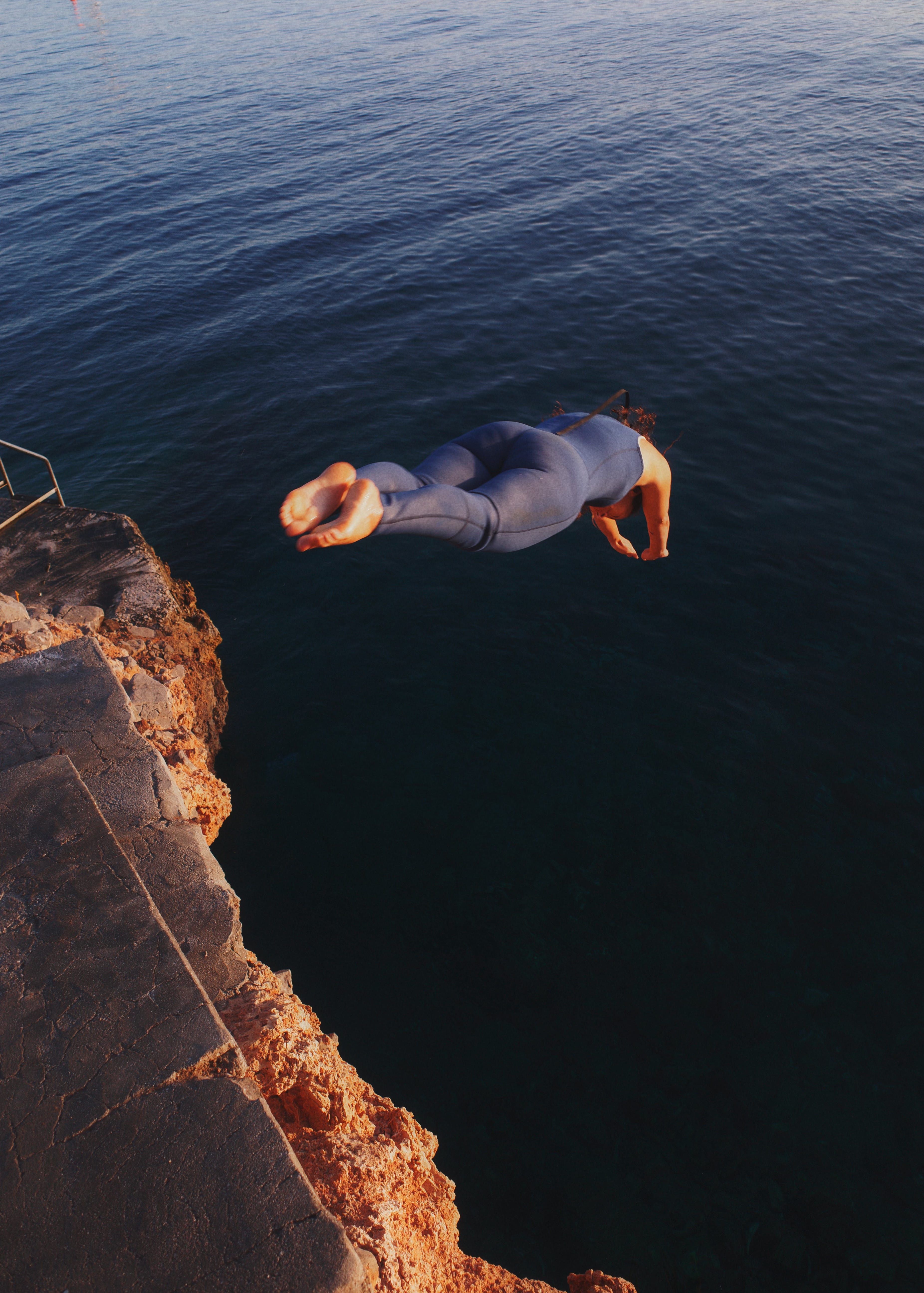
*Process insight: It’s as if I experience listening, like I am looking down into water while standing on the edge of a cliff. I see and sense the waters moving, and sometimes, I can see clearly into the depths. But more often than not, the only way to really feel into that space is to dive in. I must go there with them; I must immerse into their sharing of experience, absorbing what they feel, allowing the sharing of their story to be seen by my whole body.
What I heard in Kristin’s intake sharing was clear: a woman of enormous creative intelligence and sensitivity whose nervous system was genuinely taxed. What Kristin was experiencing was more like static — too much noise, not enough quiet space. The sensitivity that is her greatest creative gift had become, in the absence of the right conditions, a source of overwhelm rather than a source of power.
And so before I could design anything — before I could think about a symbolic architecture that might inspire creative unfolding or the initiation of a book-writing process — I had to begin with recalibration, and that always begins with water.
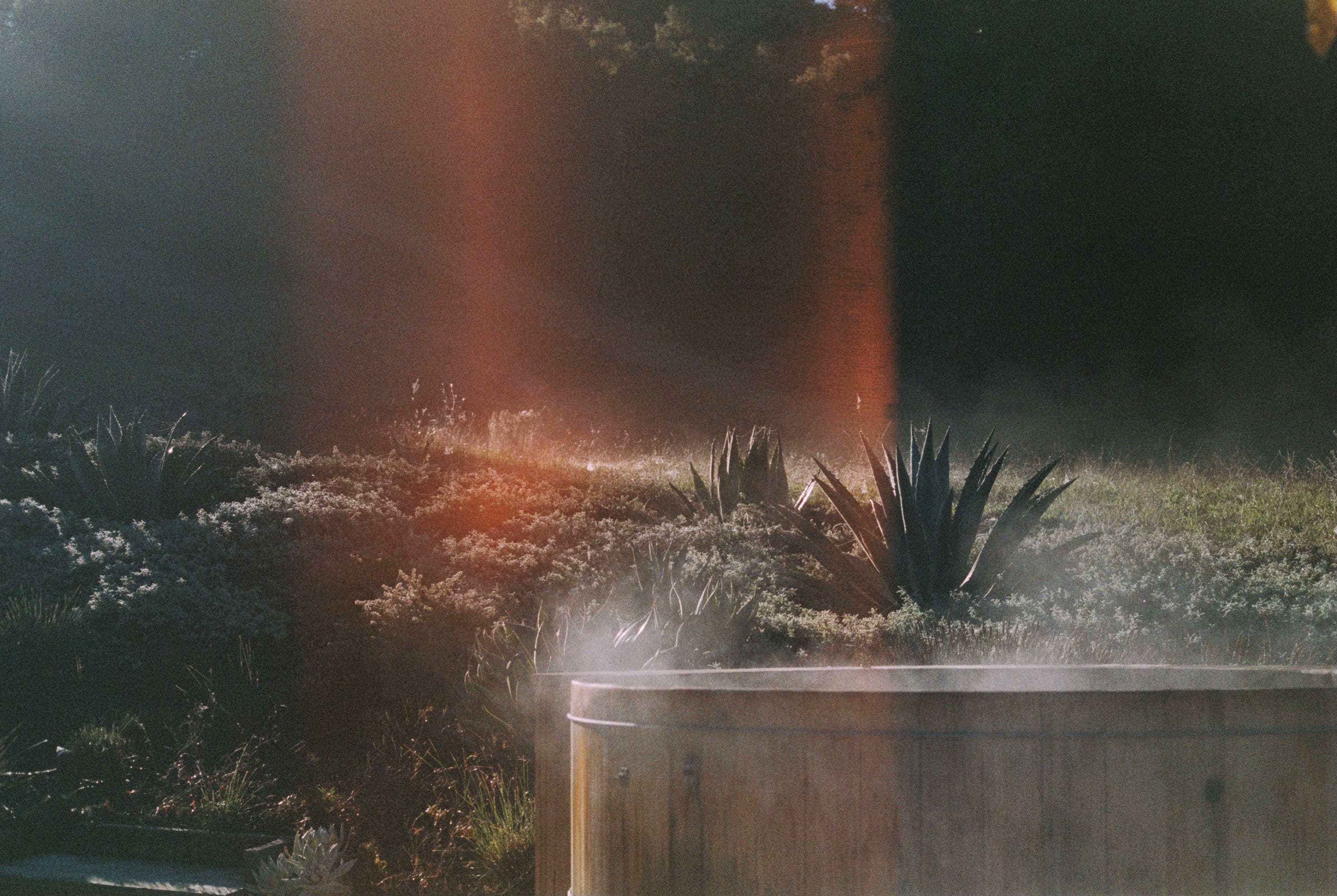
Rx: No environment relaxes the body more than water.
Result: Blue Mind state — or what I call fluid focus.
Insight: Wetter is better.
The Conditions Before the Conditions
This is perhaps the most essential thing I want to share about how I approach my work in creative practice — and about what I believe is required for genuine artful flourishing, whether you are in a residency container or seeking to evoke your own embodied expression at will:
Before we can access the depths, it is deeply nourishing to balance the nerves — in scuba diving language, this is called equalizing. It is an essential process of attuning to varying levels of pressure that are present at depth & adjusting accordingly.
The thinking mind and the feeling body are different states of being. When we are thinking — processing, analyzing, managing, strategizing — we are having a limited experience of sensing. We are not in the sensorial, embodied, open state that genuine creative work requires.
To access the deep mind — the terrain where unconscious is made manifest in symbolic encounter, where pattern organizes and reorganizes itself, where the soul’s source code is hidden — we must return to our senses. We have to restore balance between thinking and feeling in the body, dancing with the space in-between.
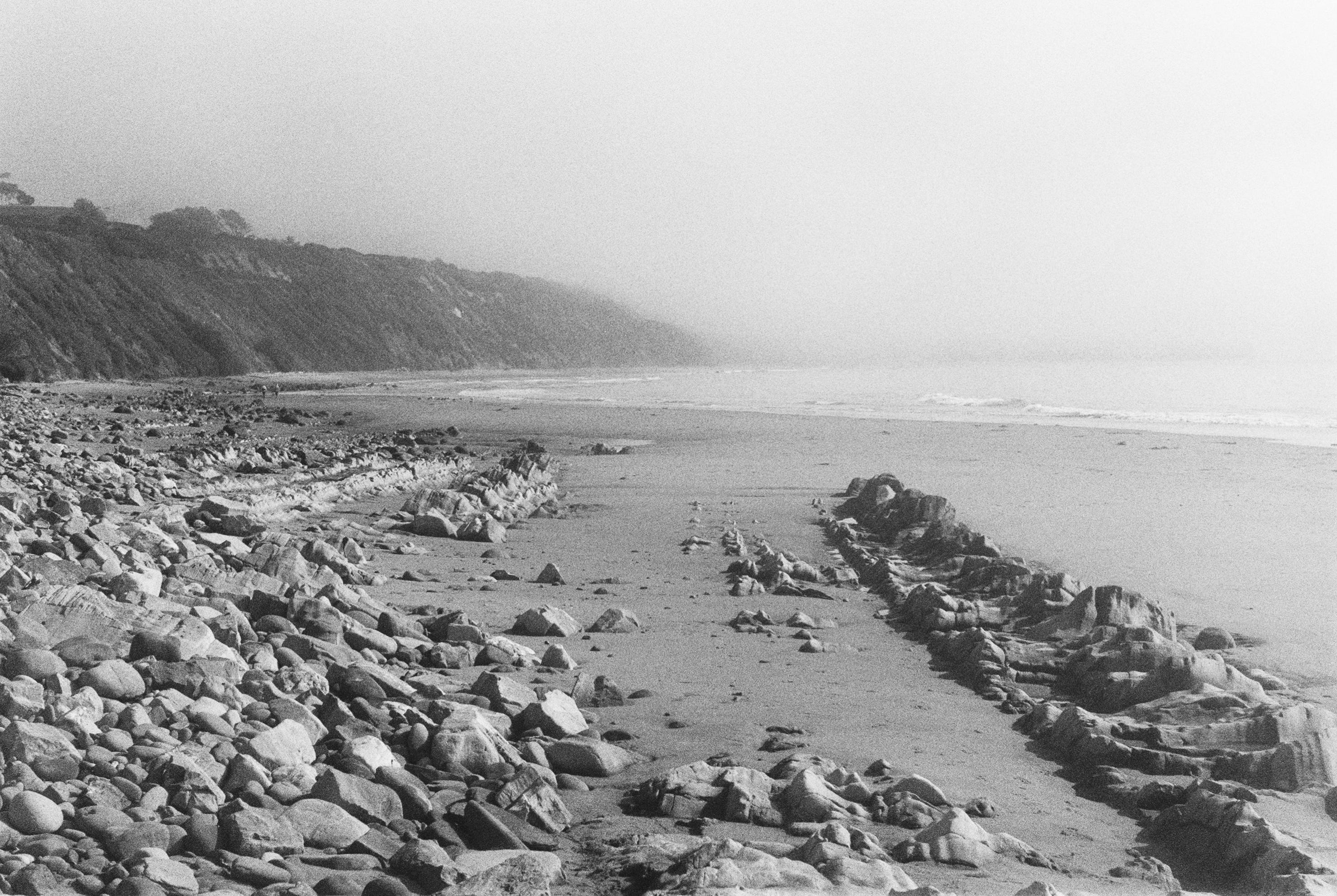
Every residency begins with an initiatory activation of reset — an experience rooted in nature, in movement, in elemental encounter. A restoration of attention, a centering of the body and focusing in on the entirety of our vessel.
What I Am Creating Conditions For
Once the nervous system has recalibrated — once the body has remembered itself and the feeling state has been invited to flow with ease — I can begin the work of helping others explore their symbolic depths.
The secrets of psyche should not be accessed by force — the soul, the deep interior self, is a dream temple — a sacred space that must be approached with care. When met with reverence, what unfolds is nothing short of miraculous.
Kristin named this in a way I couldn’t have said better myself:
“There’s nothing quite like being witnessed — having someone watch you make and then tell you what they see or feel because of what you’ve made. That validation was mothering in a way I think is essential to a creative’s launch.”
This is what I am always designing for, underneath everything else. Not the project. Not the output. Not the finished thing. But the conditions in which a person can be truly seen — in their making, in their longing, in their original nature — and receive that seeing as nourishment.
That is what changes everything.
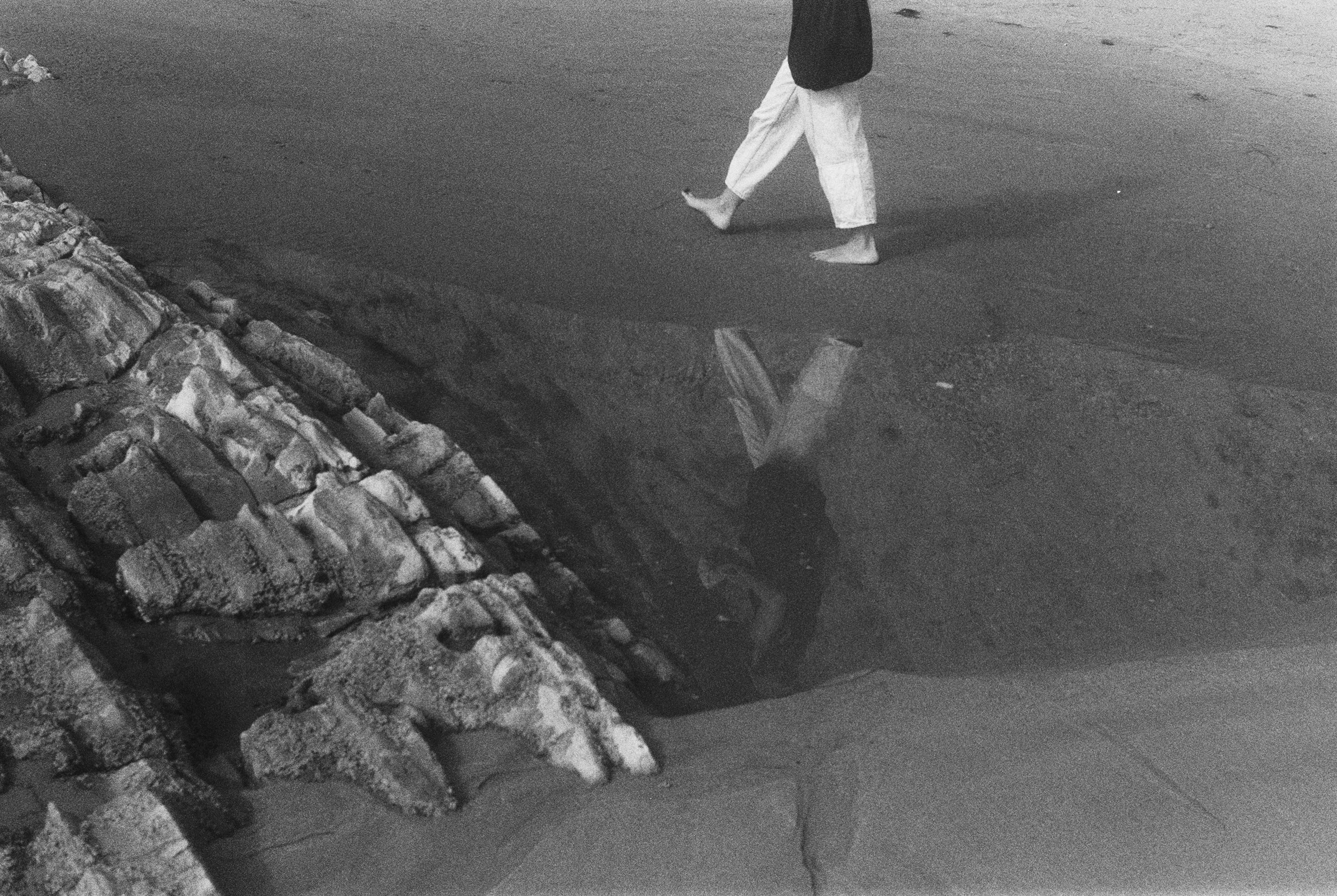
In every divine dialogue and in every moment of the residency itself, there is the slow and steady surfacing of what I call one’s symbolic language — i.e., their unique expression. A way of communicating that invites their deep feeling into form, through the practice of art. Here, the art-making is not about a particular outcome, or the “thing” that is made — it is about providing the participant, in this case Kristin, with a medium or series of mediums that invite her nature to be made manifest in physical form.
If you have spent any time in these pages before today, you will already know that stone is a material of particular importance to me. Over the years I have collected a group of friends I call — affectionately, and with full awareness of the joke — stoners. This has nothing to do with recreational substances. It is simply what happens when you spend enough time in the world paying attention to the ground beneath your feet. Stone collectors. Nature's archivists. People who understand, intuitively, that stone holds something.
I have spent a great deal of time over the years considering what exactly it holds. And what I keep returning to is this: stone is memory. Not metaphorically — materially. Stone is the earth’s way of holding time. Of keeping a record. Of saying: this happened here, and it mattered, and here is the evidence.
When I work with stone in a residency, I am working with memorial space. With the accumulated archive of a life held in physical form.
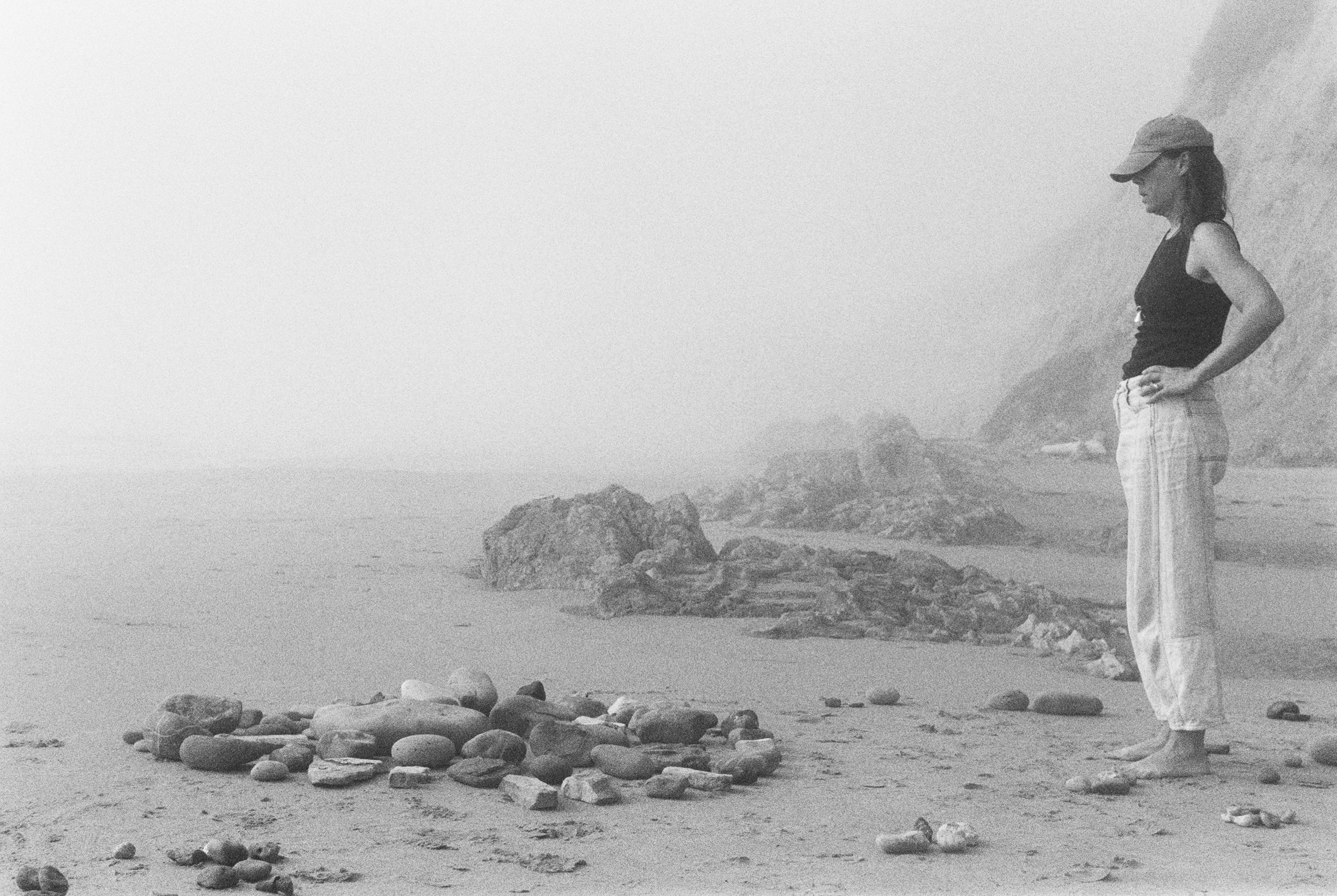
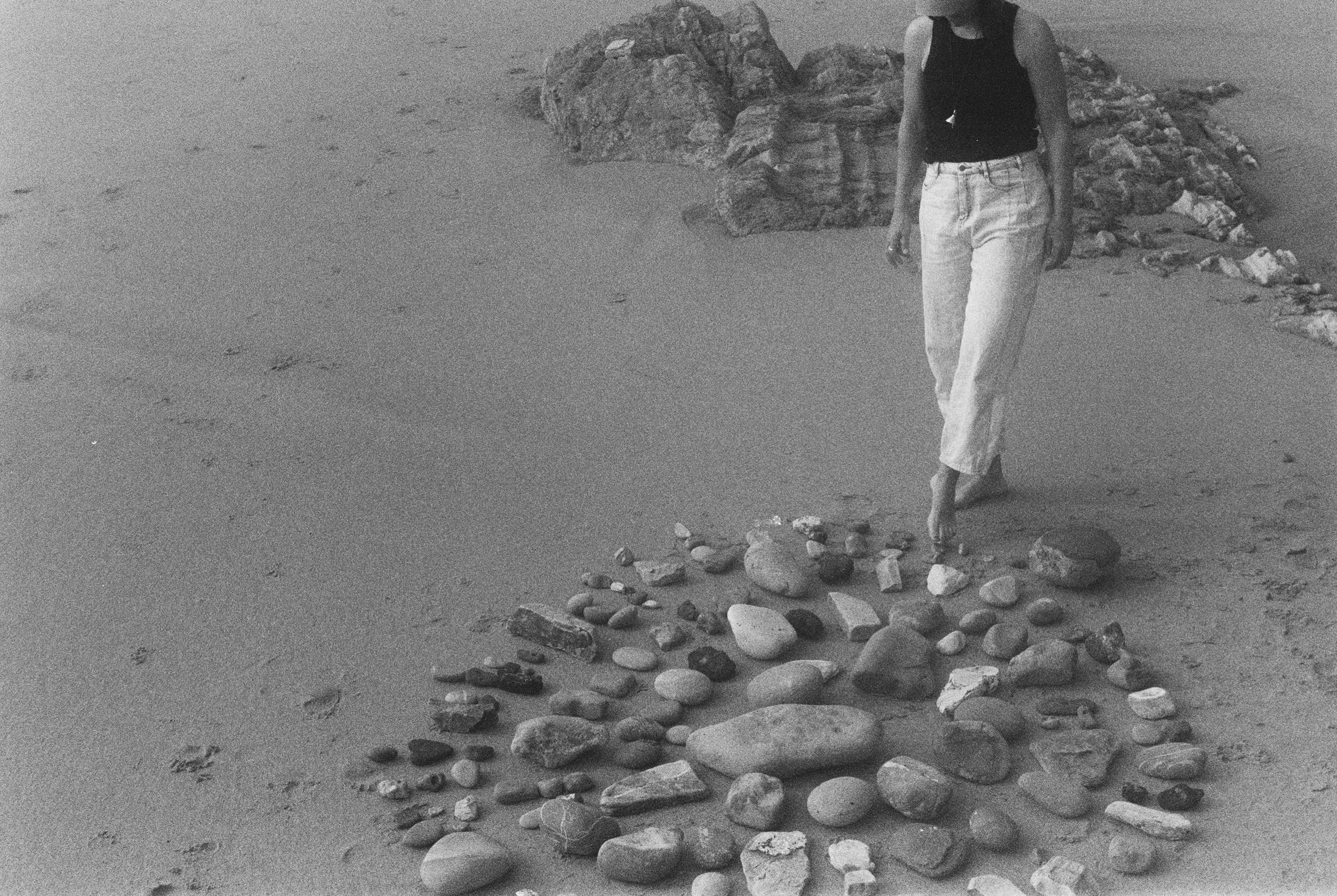
For Kristin, the 143 stones she gathered and arranged into a spiral were not decorative. They were not an art project in the conventional sense. They were a way of physically engaging with the structure of memory itself — how it accumulates, how it spirals, how it returns again and again to certain images, certain feelings, certain foundational moments that keep pressing upward through time.
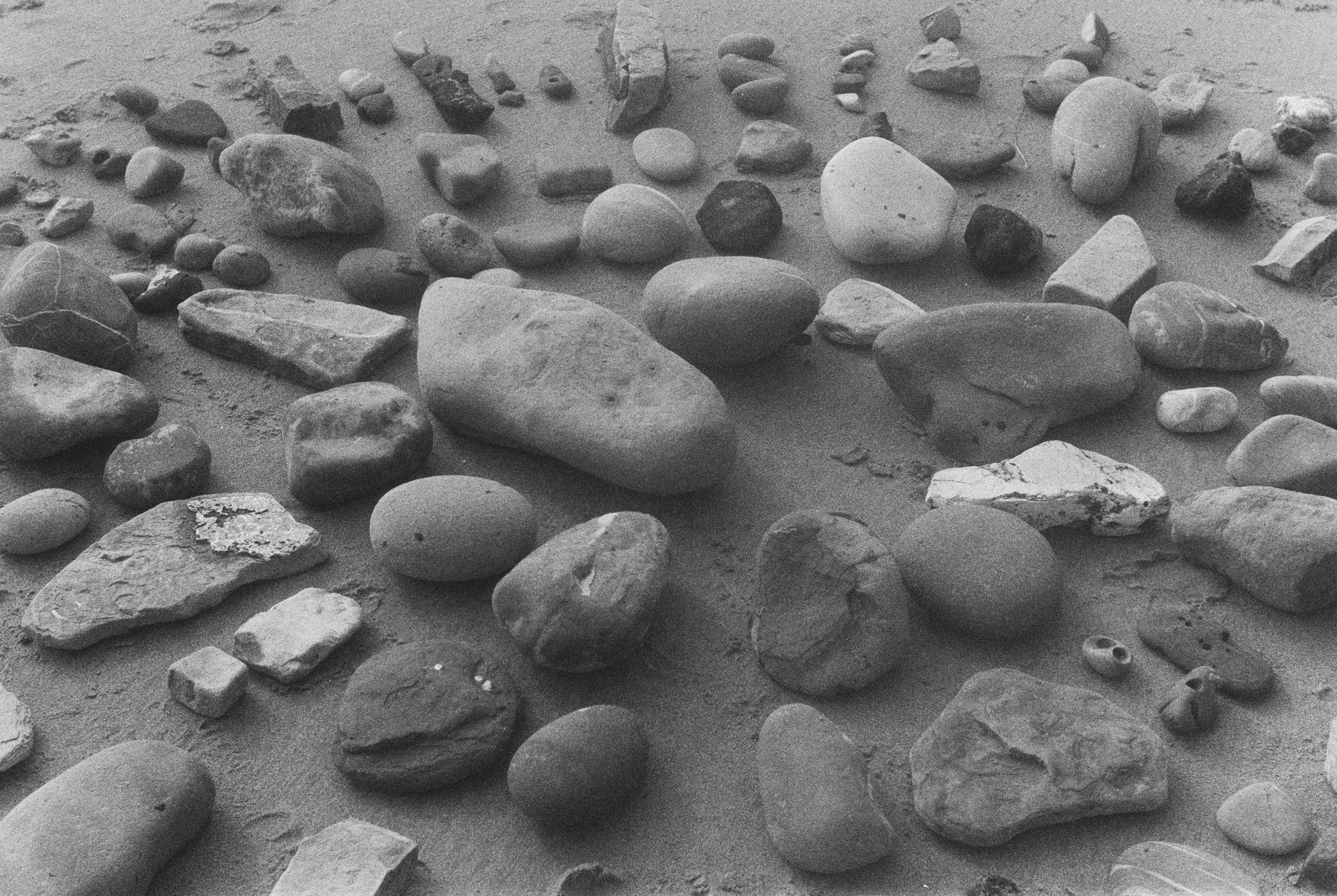
The spiral is not arbitrary either. It is one of the oldest symbols in human experience — present in ancient stone carvings, in the structure of shells, in the way water moves when it finds its natural course. The spiral represents the journey that memory takes over the course of a lifetime: not linear, not circular, but continuously returning to the same territory from a slightly different vantage point. Each revolution reveals something new about what was always there.
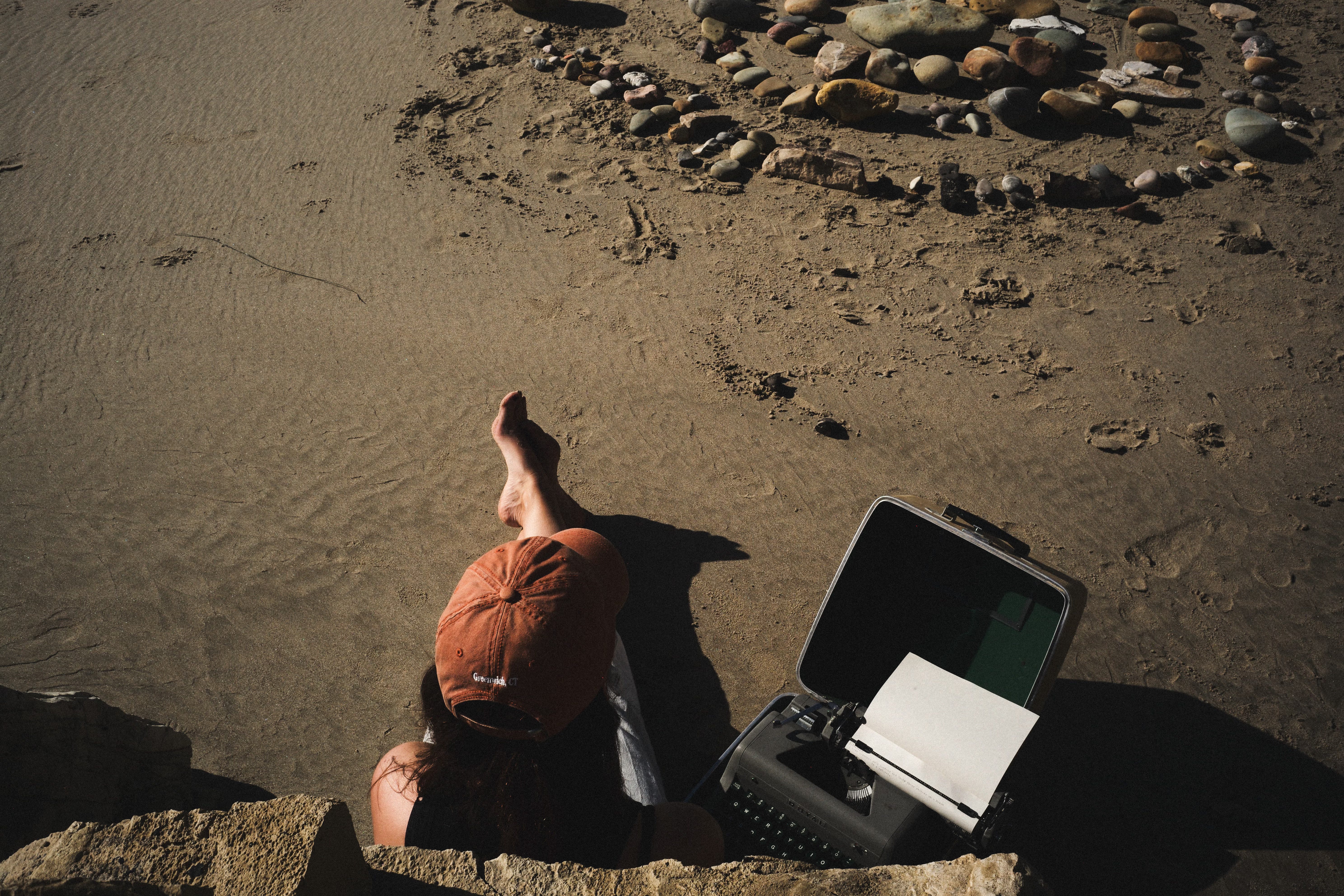
What Kristin was doing — arranging those 143 stones by hand, one by one, in the California landscape — was beginning to explore the structure of how memory moves in a body. And from that tactile, embodied exploration, she could then channel her insights into the writing process. The stone work and the writing were not separate activities. The stone work was the writing, happening in a different medium before language arrived to name it.
“You showed me the power of simplicity,” she told me afterward. “That the smallest things — a symbol, a question, a photograph — can unfold into an entire body of work. In that way, you helped me see how everything can be a portal. How constraint itself is generous.”
Constraint itself is generous.
This is what I mean when I speak about the prismatic perspective.
When we work with a material that is not directly connected to our desired creative medium — when a writer works with stone, when a photographer works with clay, when a dancer works with text — something unexpected becomes available. Each medium opens a different door into the same interior territory. Each one reveals a different angle of perception, a different facet of the same prima materia.
Stone taught Kristin something about her writing that writing alone could not have accessed. The tactile weight of each stone. The decision of where to place it. The physical act of making something that held memory in material form. All of that moved through her hands and into her body before it moved through her body and into language.
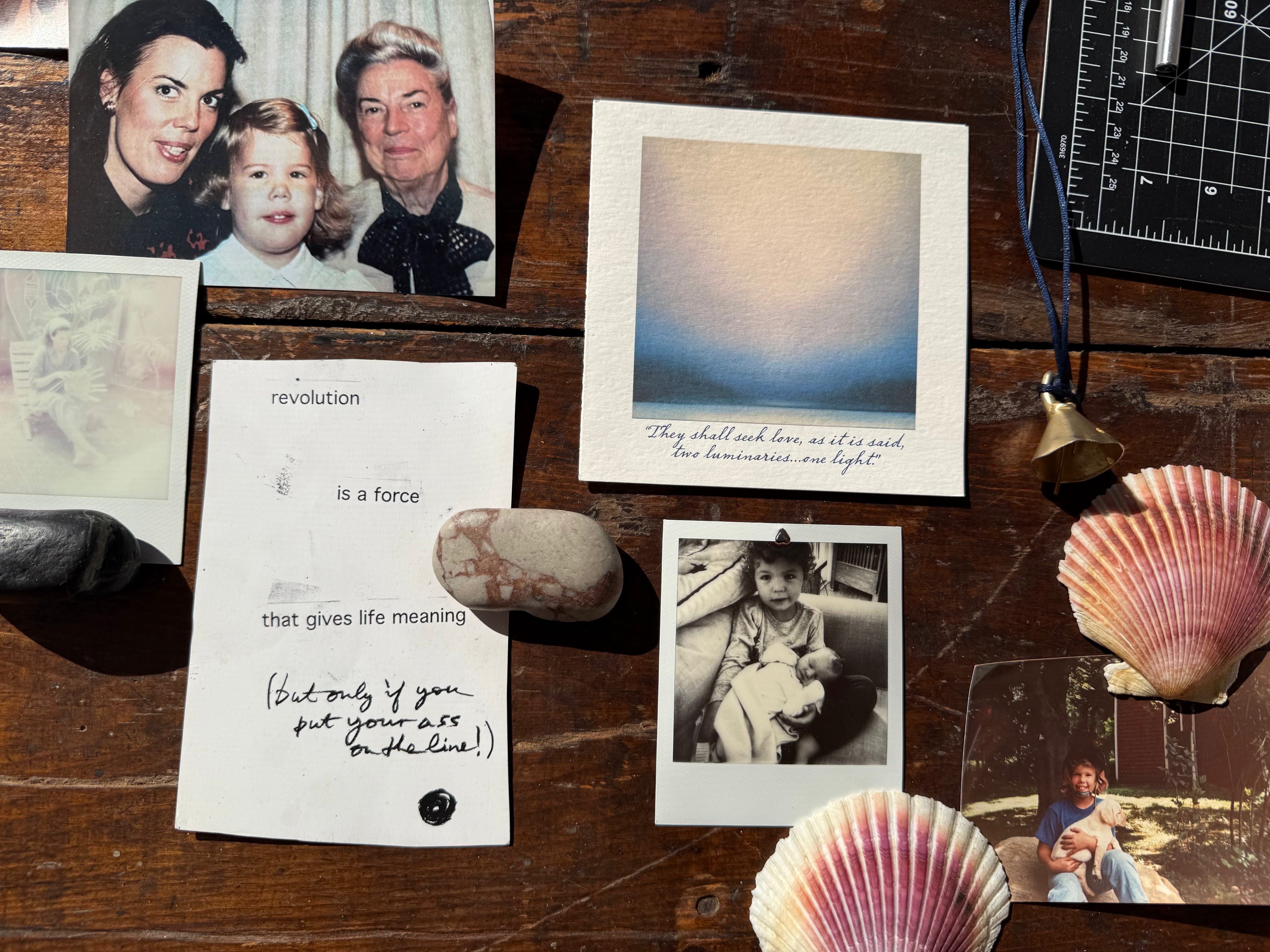
The conditions for creative flourishing are not complicated. But they are most meaningful when rooted in loving intent. And that process begins with listening — to yourself, to the symbolic matter that lives in the wellspring of your memory, to the desire that is seeking to be dreamed through your sacred language.
Apertura is a three-day 1:1 fully bespoke creative residency offered through Sēfari — held in Carpinteria, California. If something here is moving you, a divine dialogue is always a beautiful beginning — find me, here jobi@iamsefari.com & thanks for following the journey.
A beautifully painted portrait of a very special woman.